Historical queer narratives from China meet a European present
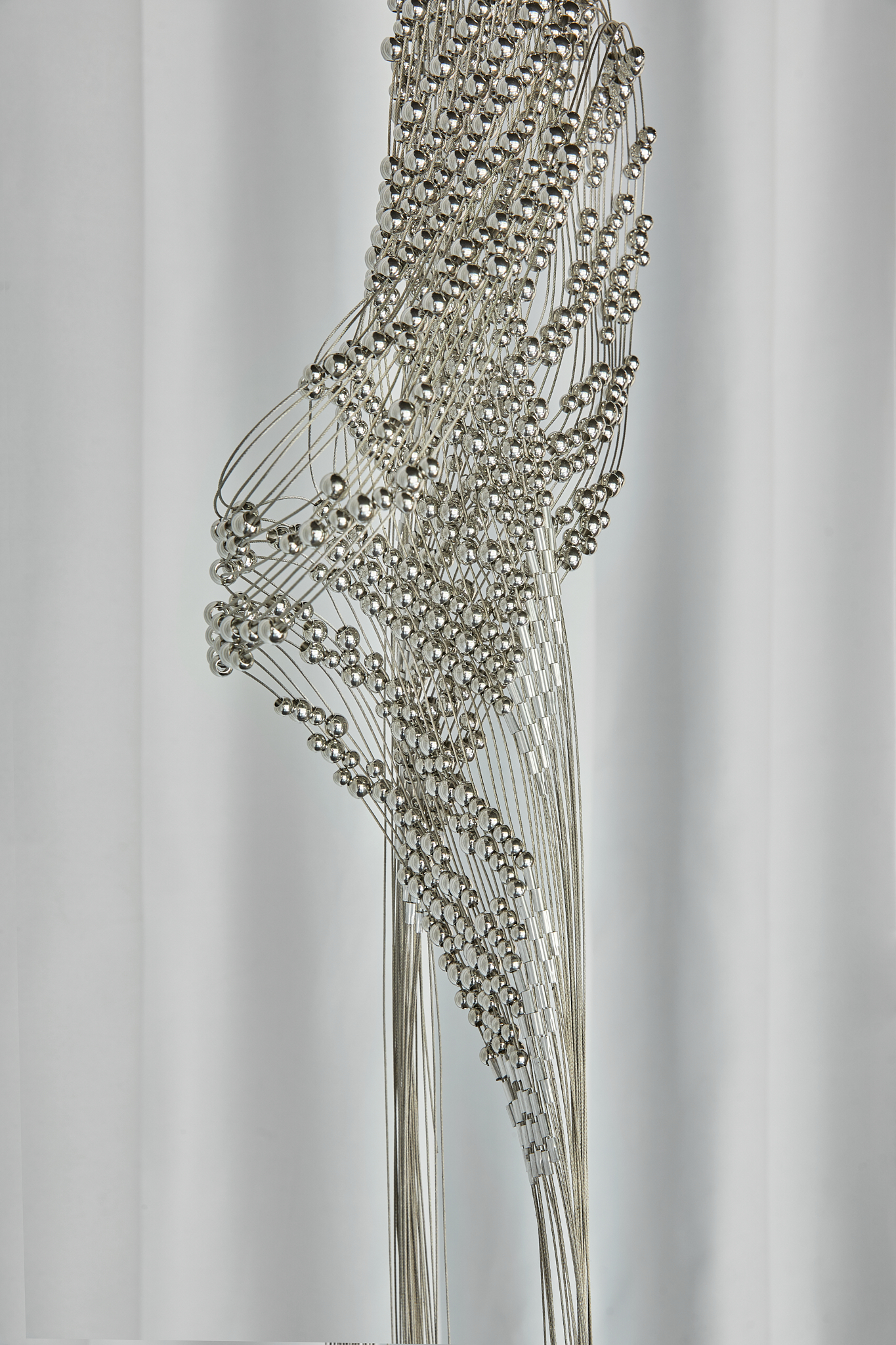
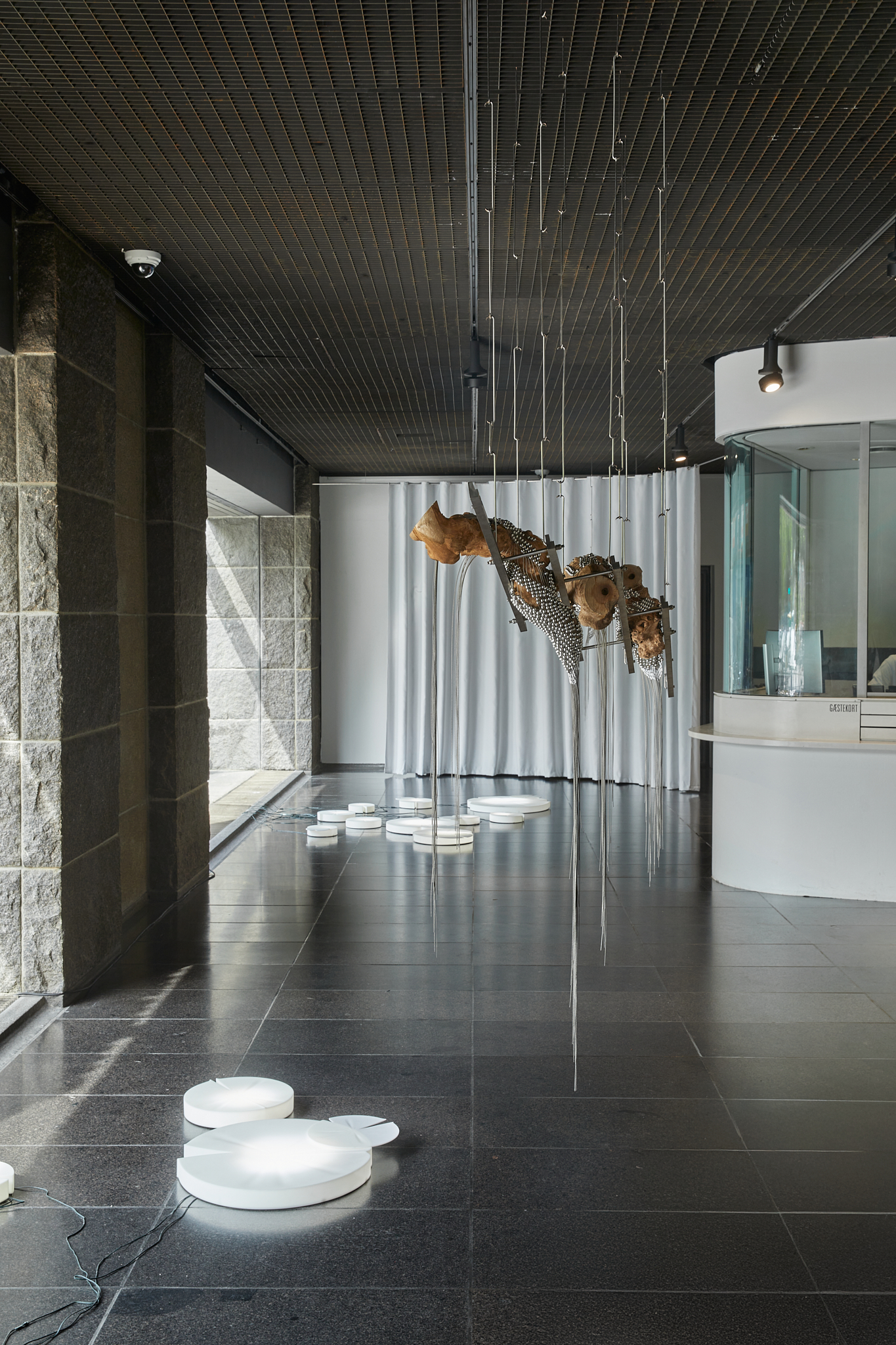
Loach Water is an installation that negotiates power, desire, and belonging across time, culture, and political boundaries. Created specifically for Politikens Forhal, the exhibition invites audiences into a complex universe by the Frankfurt-based artists Zishi Han (CN) and Wei Yang (CN), where 400-year-old love stories from the Ming dynasty are reflected in contemporary reality. Through video, performance, and sculpture, they connect historical narratives with their own experiences as queer artists of the Chinese diaspora in Europe. At a time when LGBTQ+ rights are being rolled back in many places, Han and Yang point to the fact that love between people of the same sex has always been part of human history.
Recipient of the Charlottenborg Foundation Solo Award
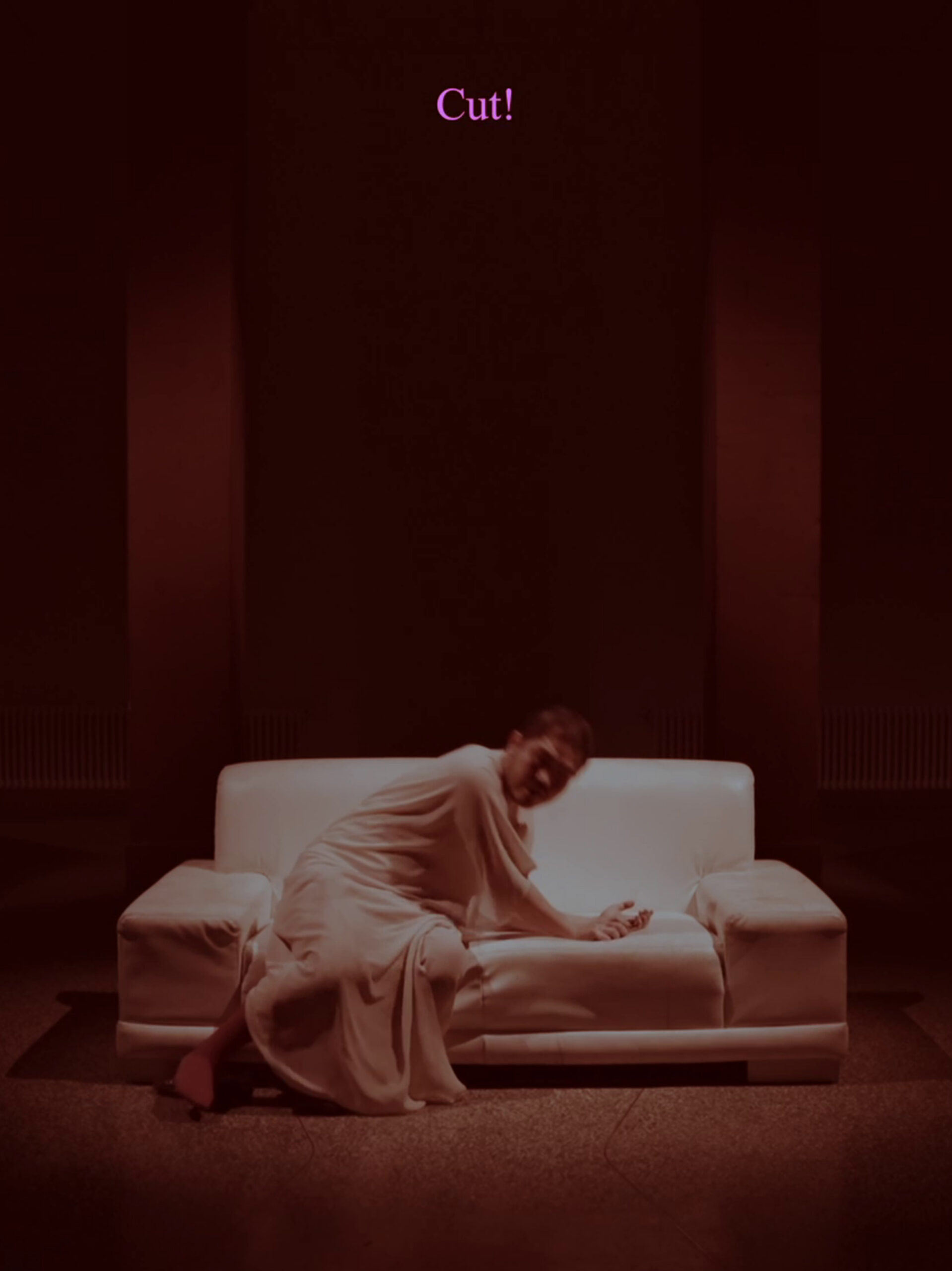
Zishi Han and Wei Yang’s first joint exhibition in Denmark is a further development of the video and performance project Hairpin Beneath, which won the Charlottenborg Foundation Solo Award 2024. Each year, the recipient of the Solo Award is selected through a collaboration between the Spring Exhibition jury and Politikens Forhal. The award includes a solo exhibition in the Forhal the following year. The recipient of the Solo Award 2025 is Jiyoon Chung, who will exhibit in the Forhal in 2026. In connection with the exhibition, Zishi Han and Wei Yang presented the work Hairpin Beneath 2 as part of the exhibition’s performance programme, created in collaboration with CHART. The work was presented at the opening in Politikens Forhal and in the cinema at Kunsthal Charlottenborg.
Homoeroticism from the Ming Dynasty reinterpreted
The 400-year-old Chinese anthology Biàn ér chāi (弁而釵) presents both simple and complex narratives of love, gender, desire, and longing. The anthology is said to have been banned under the Qing government. Today, Han and Yang rewrite and reinterpret it through video and performance works that bring historical questions of homosocial communities into a contemporary context. Here, they explore the fragile or threatened structures of power, where the desires of often autobiographical protagonists are shaped by—and exceed—the grasp of power. The result is an exploration of the boundaries between fiction and biography, and a reactivation of historical queer narratives within contemporary art.
The anthology Biàn ér chāi (弁而釵) was written by an anonymous author under the pseudonym The Moon-Heart Master of the Drunken West Lake. The texts offer a rare insight into homoerotic narratives from the late Ming dynasty. The title, which can be translated as “headgear and hairpin,” refers to an intimate scene in which a man removes his ceremonial hat and wears a woman’s hairpin—a subtle yet powerful symbol of gendered norms.
"Reaching back in time Han and Yang find sources that can create grounds for another present, implementing an approach the artists have called a ‘genre of time travel’. One that researches the implications of post imperialist masculinity, through depictions of pre imperialist masculinity. And it is that, yes. But it is also a genre simply of travel –of personal and geographical journeying and place-taking, or place-holding. Of being queer men part of a Chinese diaspora in western Europe. The removal of one self from one kind of otherness can be replaced by another. Han and Yang’s collaborative practice seems a continuous exercise in this place-holding–an unjudging movement through time and space with which they take up different places, characters and eras, revealing and negotiating the condition of a certain quiet, slippery, playful, maybe less solitary being."
- Excerpt from an exhibition text by Klara Li
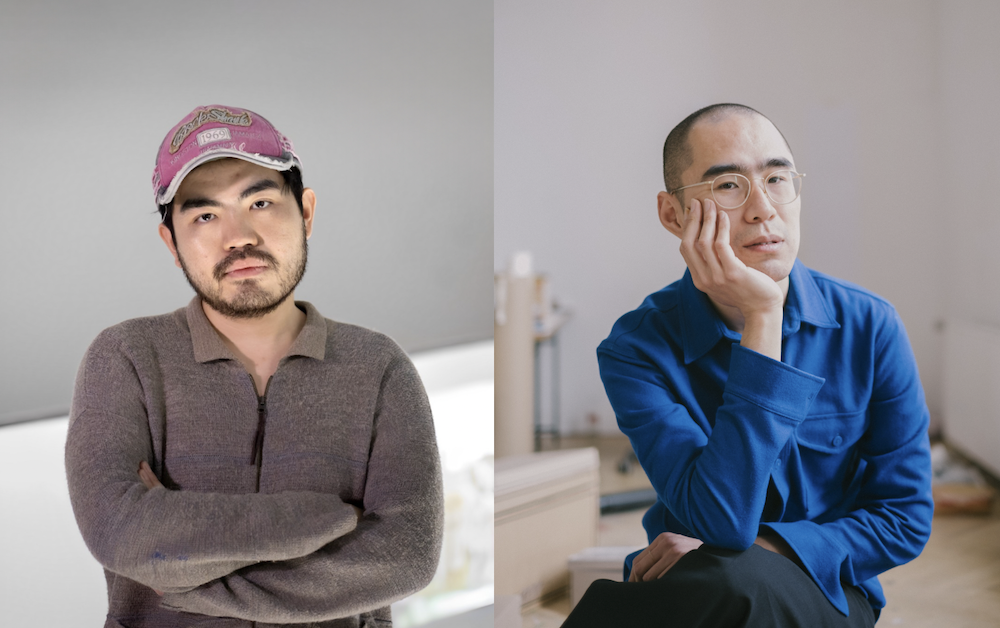
Wei Yang. Photo by Juan Peiró. Zishi Han. Photo by Augustine Paredes
Internationally acclaimed artists
Zishi Han and Wei Yang have collaborated as an artist duo for only a few years, yet have already made a strong international mark with exhibitions around the world—most recently with the joint project Hairpin Beneath at SculptureCenter in New York. Zishi Han (b. Beijing, 1990) lives and works in Frankfurt am Main and has just graduated from the Städelschule in Frankfurt. He was previously trained as an engineer and designer in Beijing and London. His works have been shown at, among others, the Busan Biennale (KR), Guangdong Times Museum (CN), Nassauischer Kunstverein Wiesbaden (DE), and Fondazione Antonio Ratti (IT). Wei Yang (b. Liuzhou, 1994) lives and works in Frankfurt am Main, is a graduate of the Sandberg Instituut in Amsterdam, and is currently studying at the Städelschule in Frankfurt. His works have recently been exhibited at Jean-Claude Maire (DE), Centro Cultural Las Cigarreras (ES), and the Stedelijk Museum (NL). In autumn 2024, Mousse published an in-depth interview with Yang about his practice and his collaboration with Zishi Han.
Loach Water is supported by the Danish Arts Foundation and the Danish Art Workshops. The exhibition is curated in collaboration with Klara Li, Executive Director of the Charlottenborg Foundation. The work Hairpin Beneath: The Stone of Three Lives was commissioned by SculptureCenter, New York, 2025.