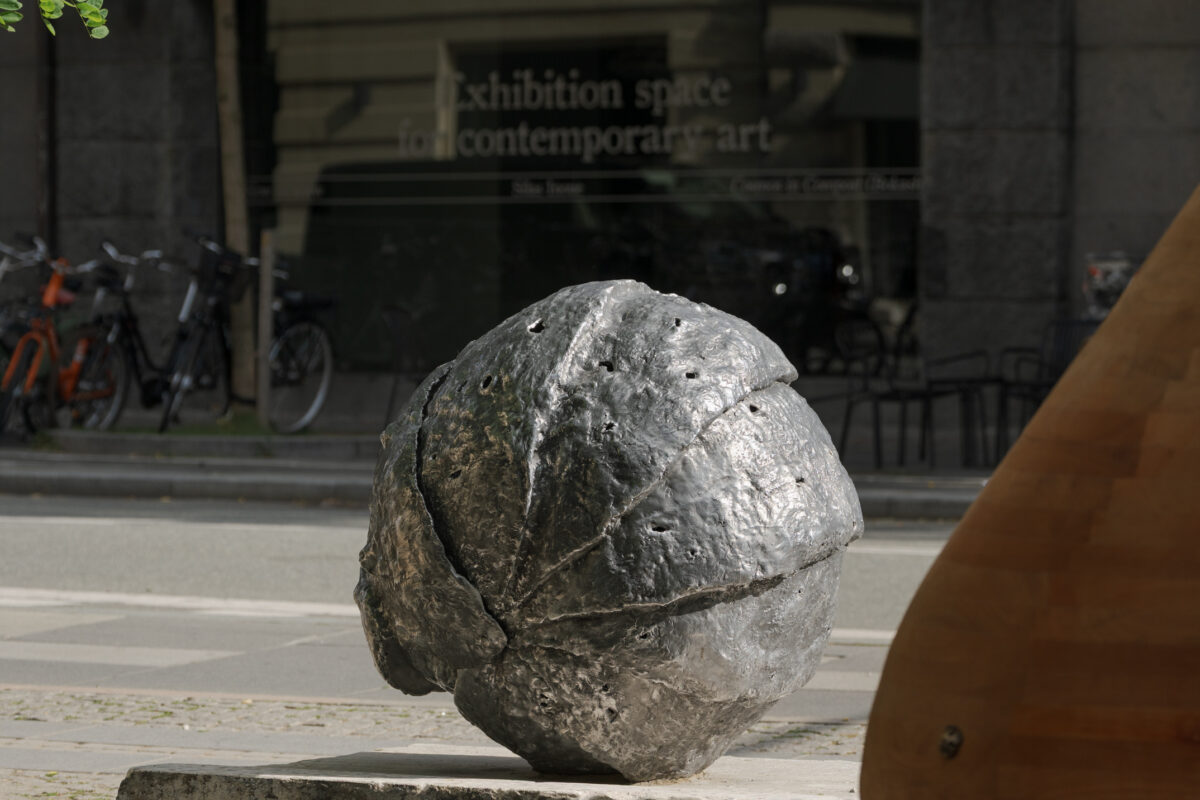
From giant plastic cocoons filled with animal waste inside Politikens Forhal to an enlarged woodlouse at Copenhagen City Hall Square containing compost collected from residents of Amager, visual artist Silas Inoue has created a total installation unfolding across indoor and outdoor spaces. Combining humour and poetry, the project reflects on cyclical transformation and interconnectedness at a time when we must rethink our relationship with nature—and, in doing so, with ourselves.

Microcosms of Shit
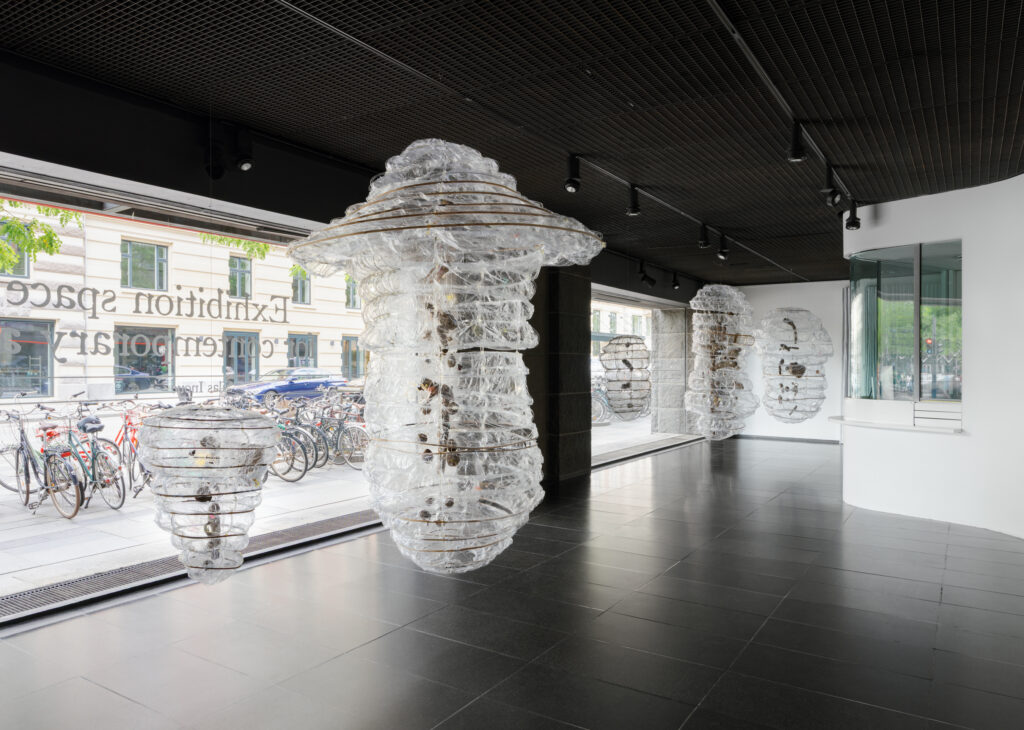
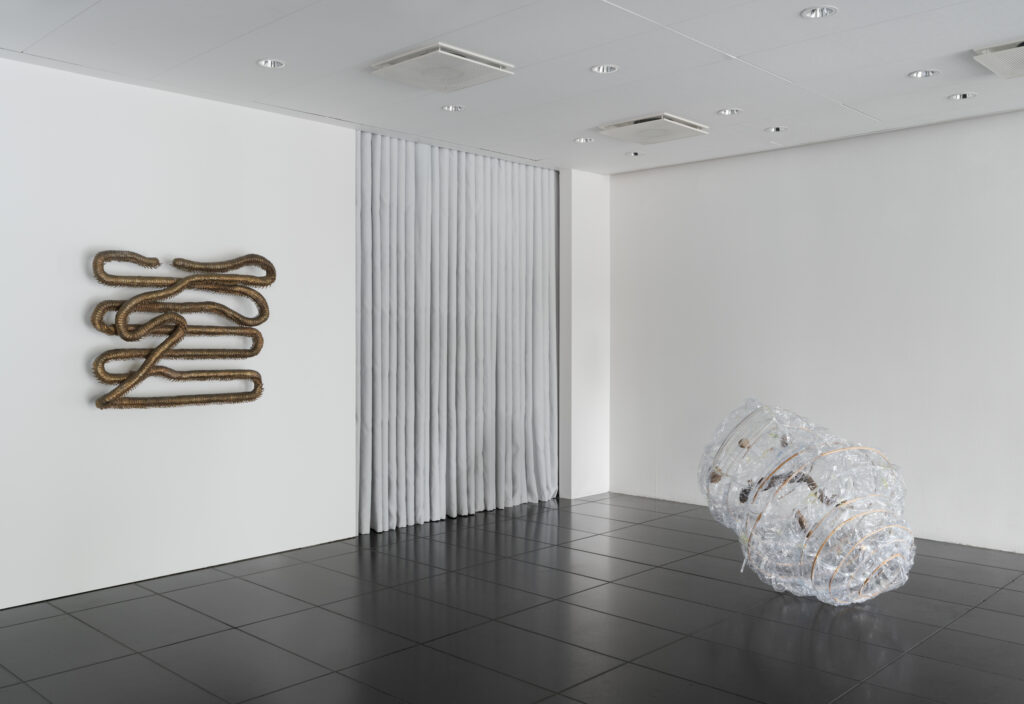
Large plastic cocoons have pupated in Politikens Forhal. Inside them, suspended mobiles with dried animal waste are balanced by enlarged bronze-cast microbes as a grotesque staging of our internal gut system.
Through playful distortions and humour, Danish-Japanese artist Silas Inoue explores humanity's relationship with nature and other species. Working in what he describes as a quasi-Asian aesthetic, he constructs speculative worlds populated by demonic creatures and insects that, despite the absence of human figures, ultimately point back to our behavior as a species at a time when concepts such as climate collapse and the sixth mass extinction dominate public discourse.
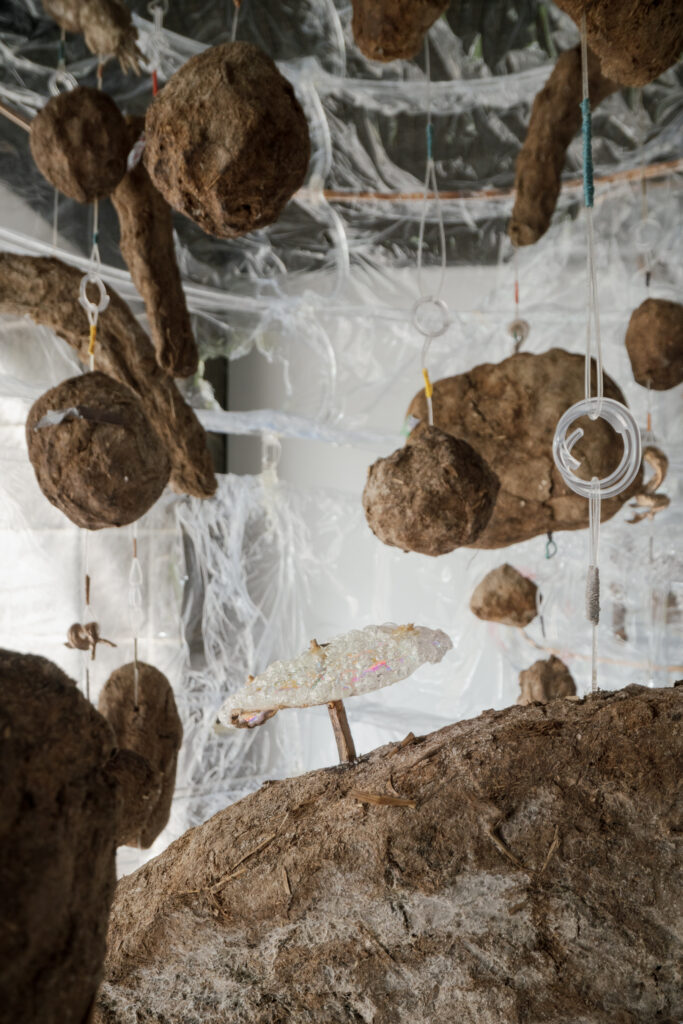
The cocoon is a classic symbol of metamorphosis, promising transformation and change. Drawing on artistic references ranging from Tetsumi Kudo's post-nuclear terrariums to Isamu Noguchi's aestheticised paper lanterns, Inoue presents the cocoons as incubators for a possible future. They remind us that we are, in fact, symbiotic organisms: we breathe air, excrete waste, and exist in constant interaction with billions of bacteria.

Waste from Amager
Beyond excrement, Inoue turns his attention to another kind of residue: the waste generated from our food culture. The Japanese word bokashi in the exhibition title refers simultaneously to a traditional woodblock printing technique, the blurring of explicit imagery, and a composting method that makes it possible to compost food waste even in compact urban kitchens.
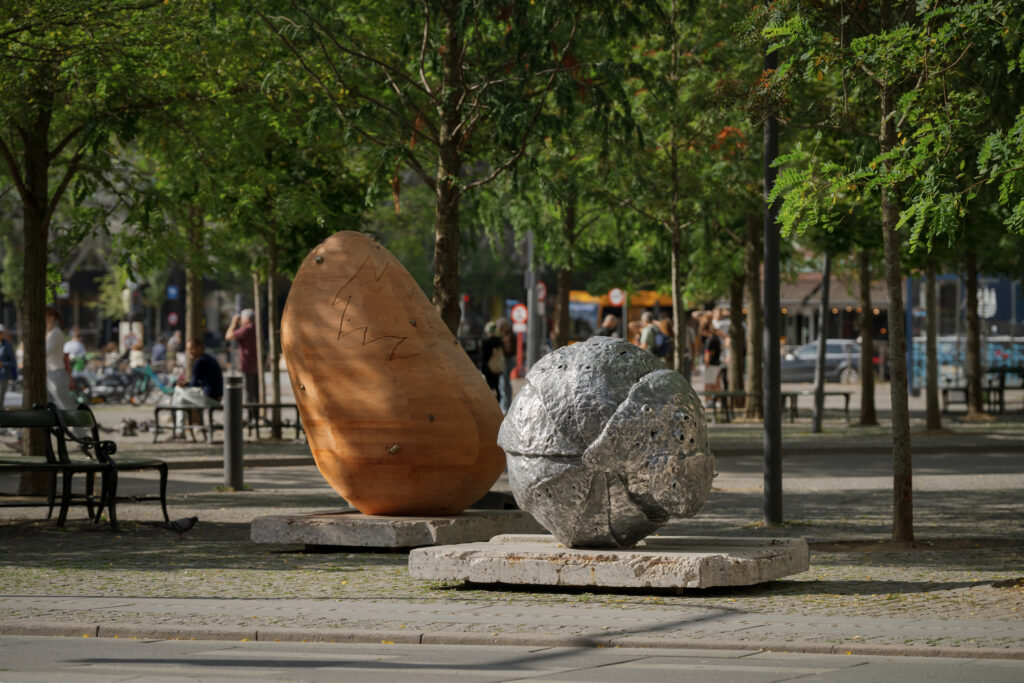
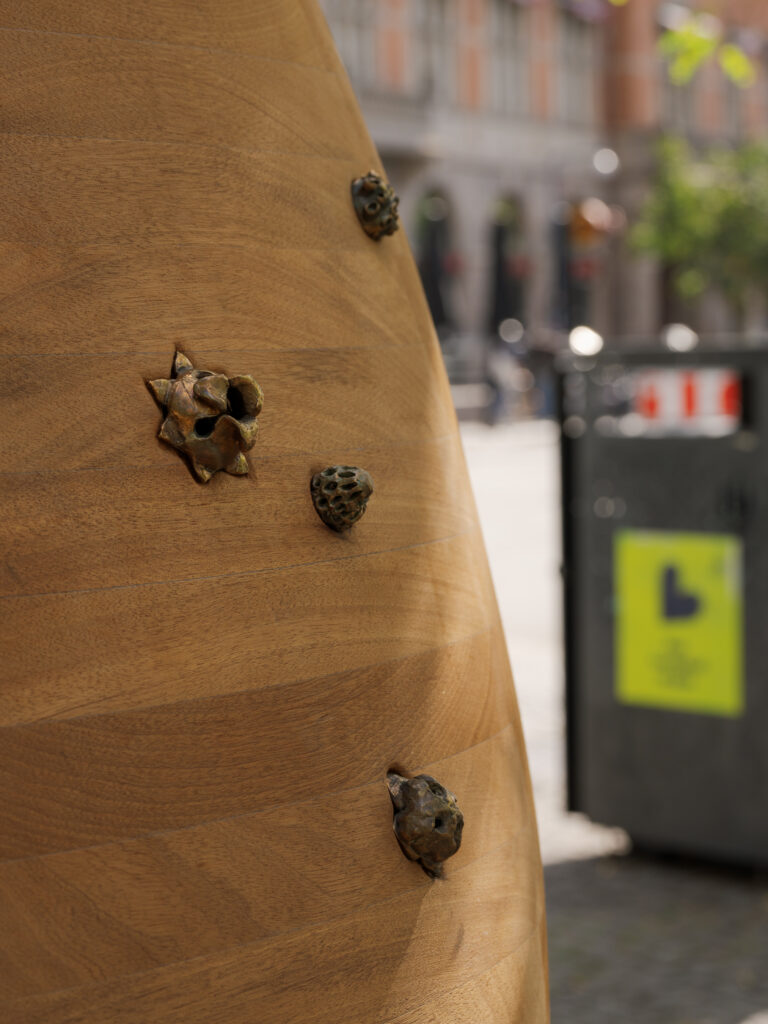
As a tribute to the cyclical nature of composting, the exhibition extends onto Copenhagen City Hall Square with a sculpture group comprising an enlarged aluminium woodlouse and a monumental wooden seed. Later this year, both sculptures will travel to the Sønderbro Area Renewal District (Områdefornyelse) on Amager. For the opening, they will be filled with organic waste collected from local residents, and over time, plants known to benefit the human microbiome will emerge through the sculptures' ornamental breathing holes. Growth and decay coexist as different temporal phases fused into a single cycle.
Biting Their Own Tails
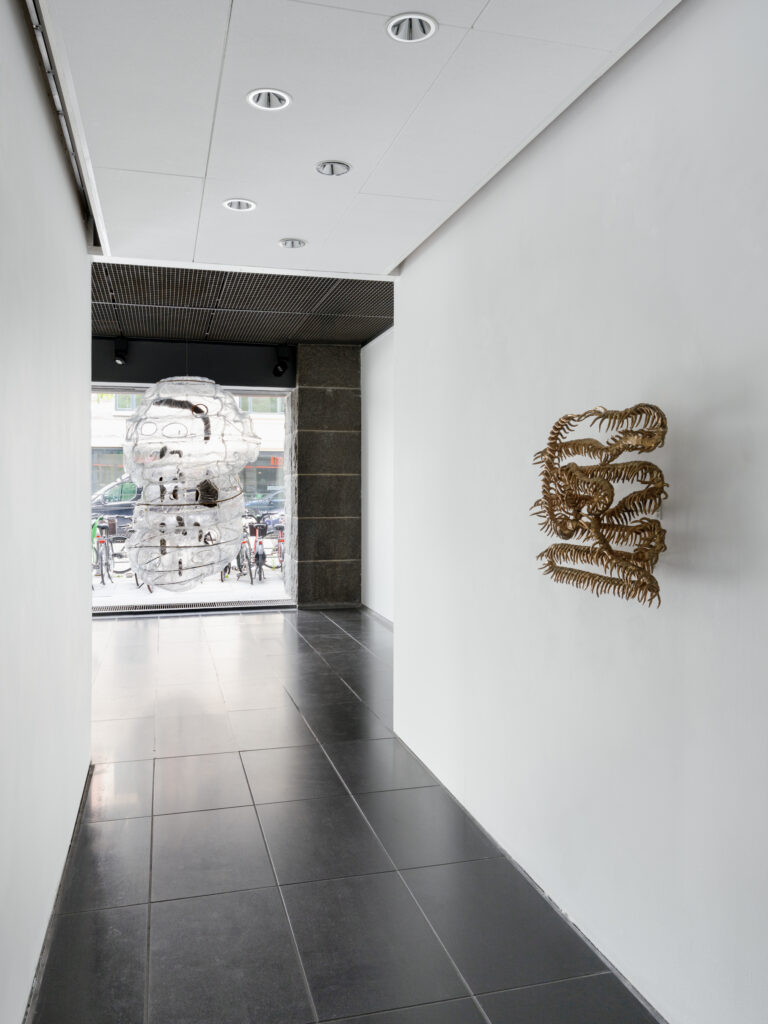
Beyond the cocoons, millipedes and centipedes appear across the exhibition walls, each biting its own tail. Modelled on the condenser and evaporator coils of air-conditioning systems, they point to a web of feedback loops: as the planet warms, we switch on cooling systems that generate heat and consume energy, producing yet more greenhouse gas emissions. At the same time, the works evoke ecological feedback systems, as centipedes prey on and regulate millipede populations, while millipedes consume and decompose organic matter.
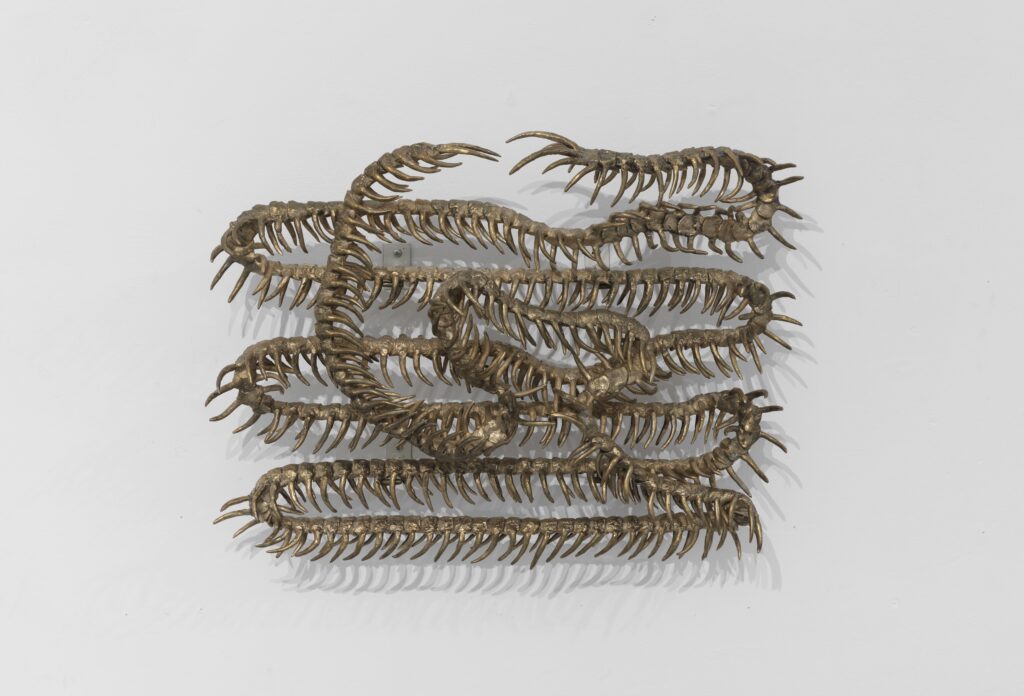
Woodlice, centipedes, and millipedes have together survived multiple mass extinctions. Humanity has not. Inoue's works thus gesture towards the peculiar possibility that humans may ultimately become only a brief parenthesis in the long span of these animal groups. Yet this is not presented as a detached vision of the future. Instead, the works unfold as a tactile and imperfect landscape, where beauty emerges through the prospect of surviving together by dissolving the boundaries between the human and the more-than-human, allowing such categories to grow wild.
About the Artist
Danish-Japanese artist Silas Inoue has exhibited internationally at venues including Ulterior Gallery in New York, Sonje Art Center in Seoul, and CAPC Musée d'Art Contemporain de Bordeaux. His upcoming solo exhibition at Bornholm Art Museum opens in 2027. Most recently, his work has been presented at Horsens Art Museum, Copenhagen Contemporary, and Malmö Konsthall. He lives on Amager in Copenhagen.

In Collaboration with the City of Copenhagen
The project forms part of Politikens Forhal's three-year collaboration with the City of Copenhagen to commission temporary public artworks for Copenhagen City Hall Square, each of which is subsequently relocated to one of the municipality's Area Renewal Districts. Supported by the Obel Family Foundation, the initiative aims to create new meeting places and foster public dialogue through contemporary art.
The City of Copenhagen's Mayor for Technical and Environmental Affairs, Line Barfod, says:
"We are delighted to collaborate on this upcoming art project in the Sønderbro neighbourhood, which will actively involve local residents throughout the process. Art has the power to spark conversations and strengthen communities across the city. Silas Inoue's practice engages with the climate crisis and explores how waste can be repurposed in new and unexpected ways through art. I look forward to following the project's development and seeing the positive changes it will bring."

An area renewal district (Områdefornyelse) is a targeted municipal initiative aimed at revitalising neighbourhoods facing social and physical challenges. These programmes seek to improve the physical, social, and cultural environment by creating attractive public spaces, strengthening local networks, and supporting new forms of community. Residents and local stakeholders play a central role throughout the process, participating in steering committees and working groups that help shape projects for their neighbourhood. Art is often an integral part of these initiatives, contributing to lasting improvements in the area's physical, social, and cultural life.



The exhibition and public commission are supported by:
The Obel Family Foundation, the New Carlsberg Foundation, and the Danish Arts Foundation.
Special thanks to:
The City of Copenhagen, Broncestøberiet Peter Jensen, Alba Snedkeri og Tegnestue, Blue Phoenix Denmark, Art Hub Copenhagen, Agriton, Munksøgård, Folk Kombucha, and Bornholms Kildevand.